
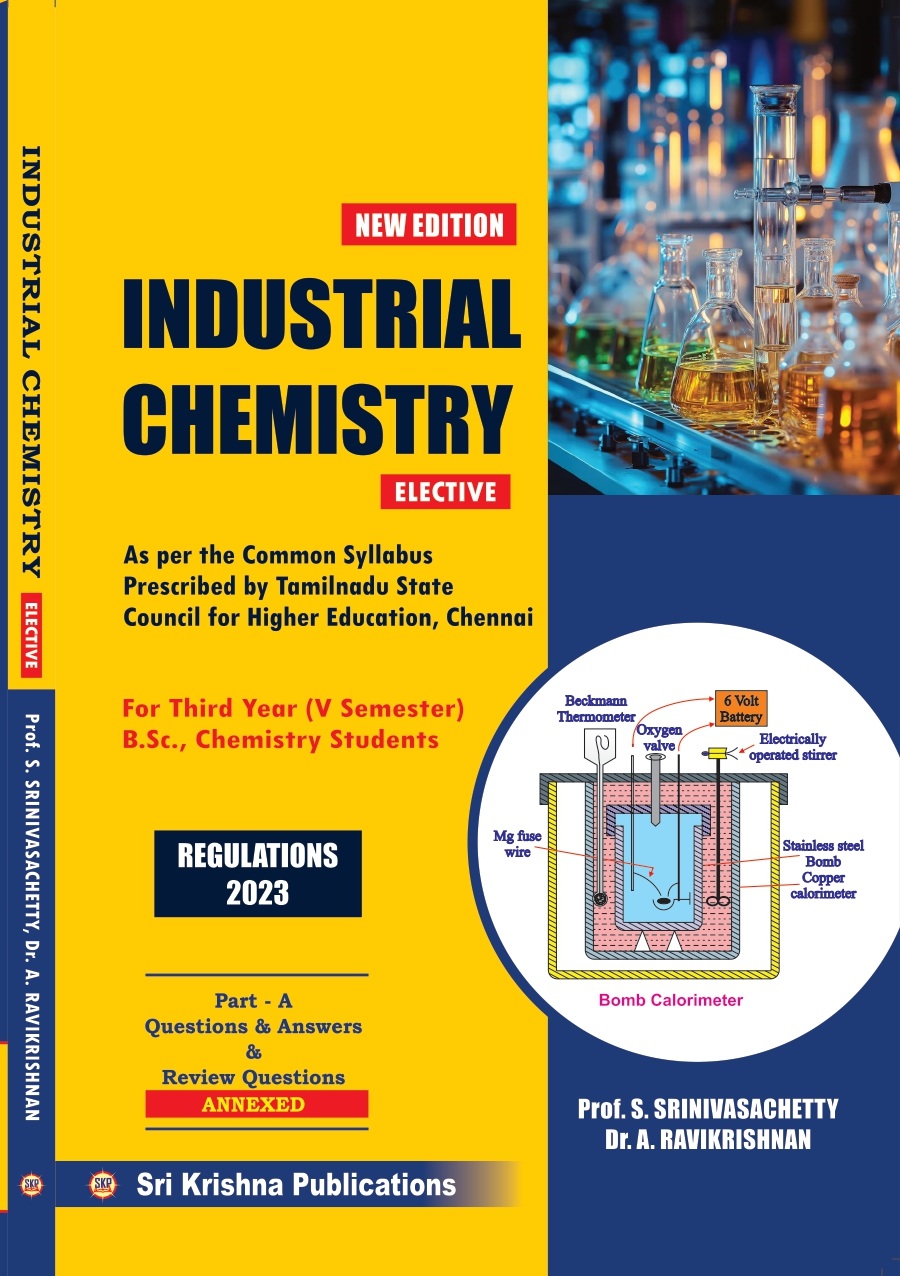
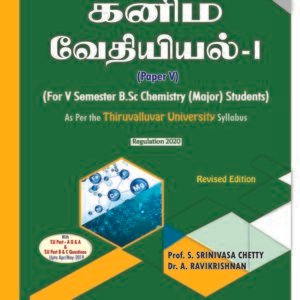
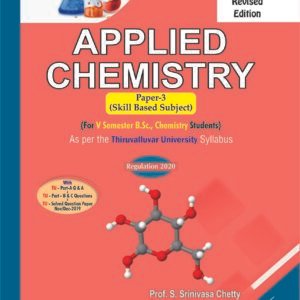
Syllabus
Industrial Chemistry
UNIT I: Survey of Indian Industries and mineral
resources in India
Fuels: Classification, characteristics of fuels. Solid fuels: coal
– classification; analysis of coal-proximate analysis and
ultimate analysis; calorific value-determination, carbonisation of
coal.
Liquid fuels: Petroleum – characteristics, Gasoline aviation
petrol-knocking in internal combustion engines, antiknock
agents; unleaded petrol-octane number, cetane number.
Gaseous fuel: advantages over solid and liquid fuels; water
gas, producer gas, carburetted water gas – preparations – uses.
Natural gas: LPG-composition, advantages application; gobar
gas-production, composition, advantages, application.
Propellants – rocket fuels (basic idea)
UNIT II: Cosmetics
Skin care: powders, ingredients; creams and lotion-cleansing,
moisturing, all purpose shaving cream, sunscreen; make up
preparations.
Dental care: tooth pastes – ingredients.
Hair care: shampoo-types, ingredients, conditioners-types,
ingredients.
Perfumes: natural-plant origin-parts of the plant used, chief
constituents; animal origin-amber gries, civetone and musk;
synthetic-classification-esters-amylsalicylate
alcohols-citronellol; terpeneols-gereniol and nerol;
ketones-muskone, coumarin; aldehydes-vanilin.
Soaps and detergents
Soaps-properties, manufacture of soap-batch process;
types-transparent soap, toiler soap, powder soap and liquid soap
– ingredients.
Detergents-definition, properties-cleansing action;
soapless detergents – anionic, cationic and non-ionic (general
idea only); uses of detergents as surfactants. Biodegradability
of soaps and detergents.
UNIT III: Sugar industry
Manufacture from sugar cane; recovery of sugar from
molasses; testing and estimation of sugar.
Food preservation and processing
Food spoilage – causes, Food preservation – methods –
high temperature, low temperature, drying, radiation; Food
additives – preservatives, flavours, colours, anti-oxidants,
sweetening agents; hazards of using food additives; Food
standards – Agmark and Codex alimentarius.
UNIT IV: Abrasives
Definition, characteristics, types-natural and synthetic;
natural abrasives – diamond, corundum, emergy, garnet, quartz
– composition, uses; synthetic abrasives – carborundum,
aluminium carbide, boron carbide, boron nitride, synthetic
graphite – composition and uses.
Leather industry
Structure and composition of skin, hide; Manufacture of
leather – pre-tanning process – curing, liming, beating,
pickling; methods of tanning-vegetable, chrome – one bath, two
bath process; finishing.
Paper industry
Manufacture of pulp – mechanical, chemical processes;
sulphate pulp, rag pulp; manufacture of paper – beating,
refining, filling, sizing, colouring, calendaring; cardboard.
UNIT V: Lubricants
Definition, classification-liquid, semi-solid, solid and
synthetic; properties-viscosity index, flash point, cloud point,
pour point, aniline point and drop point; greases-properties,
types; cutting fluids, selection of lubricants.
Cement industry
Cement – types, raw materials; manufacture-wet process,
constituent of cement, setting of cement; properties of
cement-quality, setting time, soundness, strength; mortar,
concrete, RCC; curing and decay of concrete.
Intellectual property rights
Introduction to Intellectual Property Rights – Patents –
Factors for patentability – Novelty, Non obviousness, Industrial
applications – Patent offices in India: Trademark – Types of
trademarks – Certification marks, logos, brand names,
signatures, symbols and service marks








Reviews
There are no reviews yet.